

Upcoming launches · next 4 weeks
Enter a location to see what you can see.
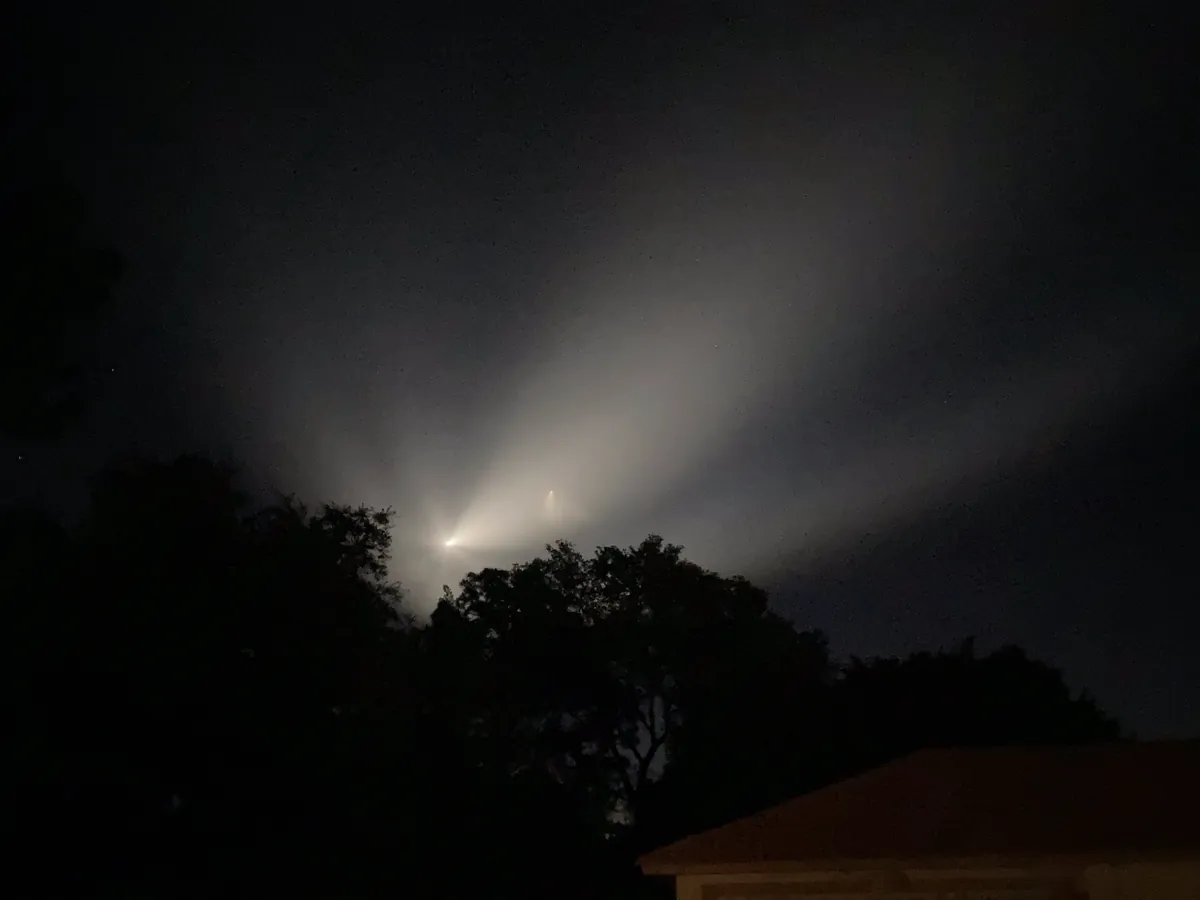
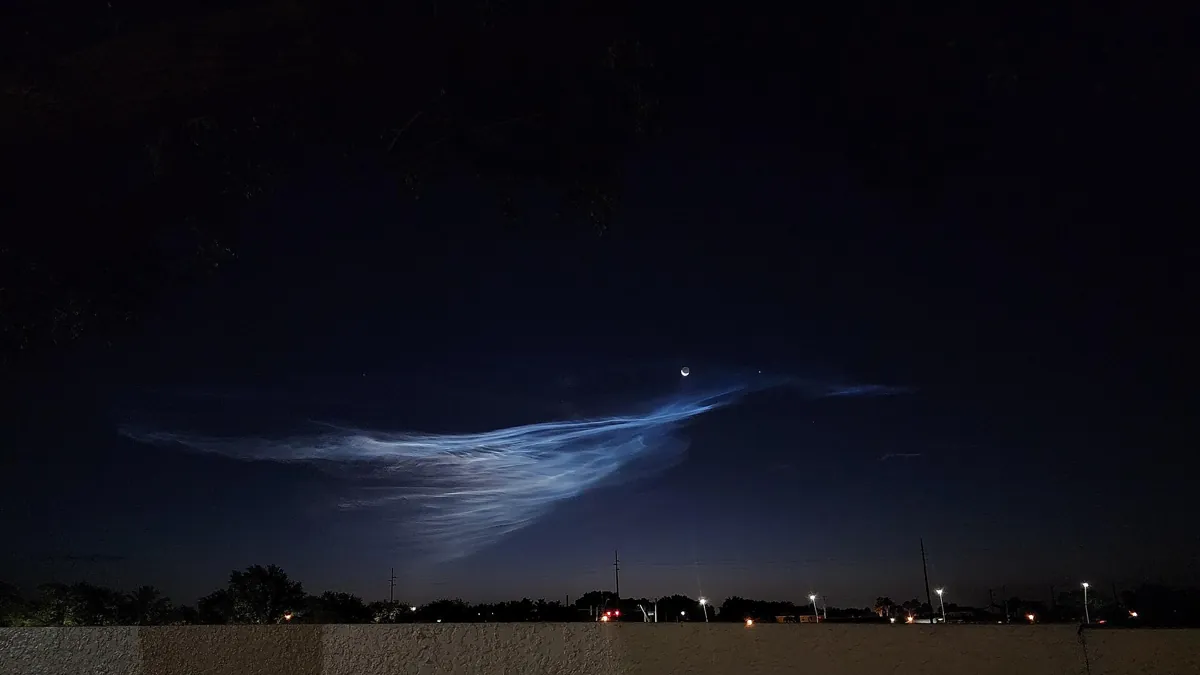
This is the jellyfishReal photos
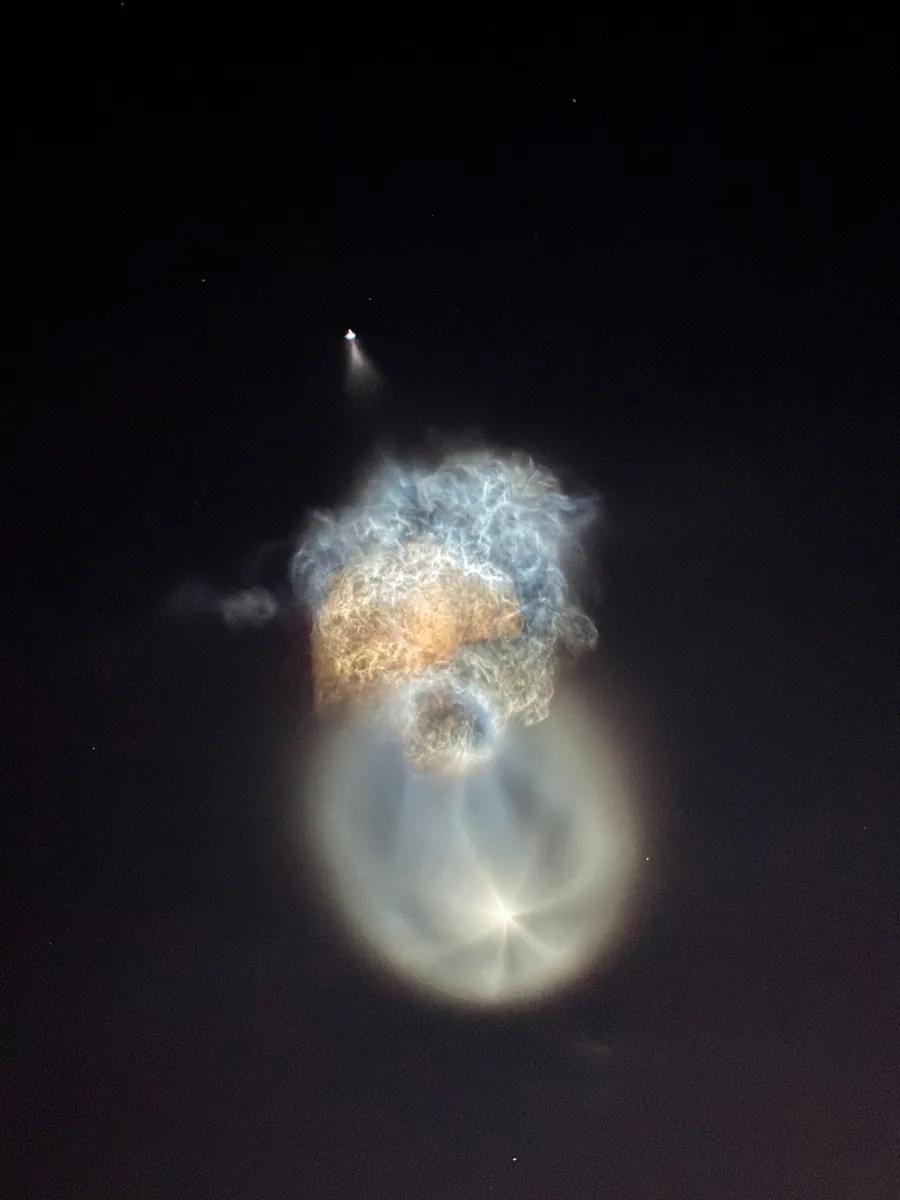

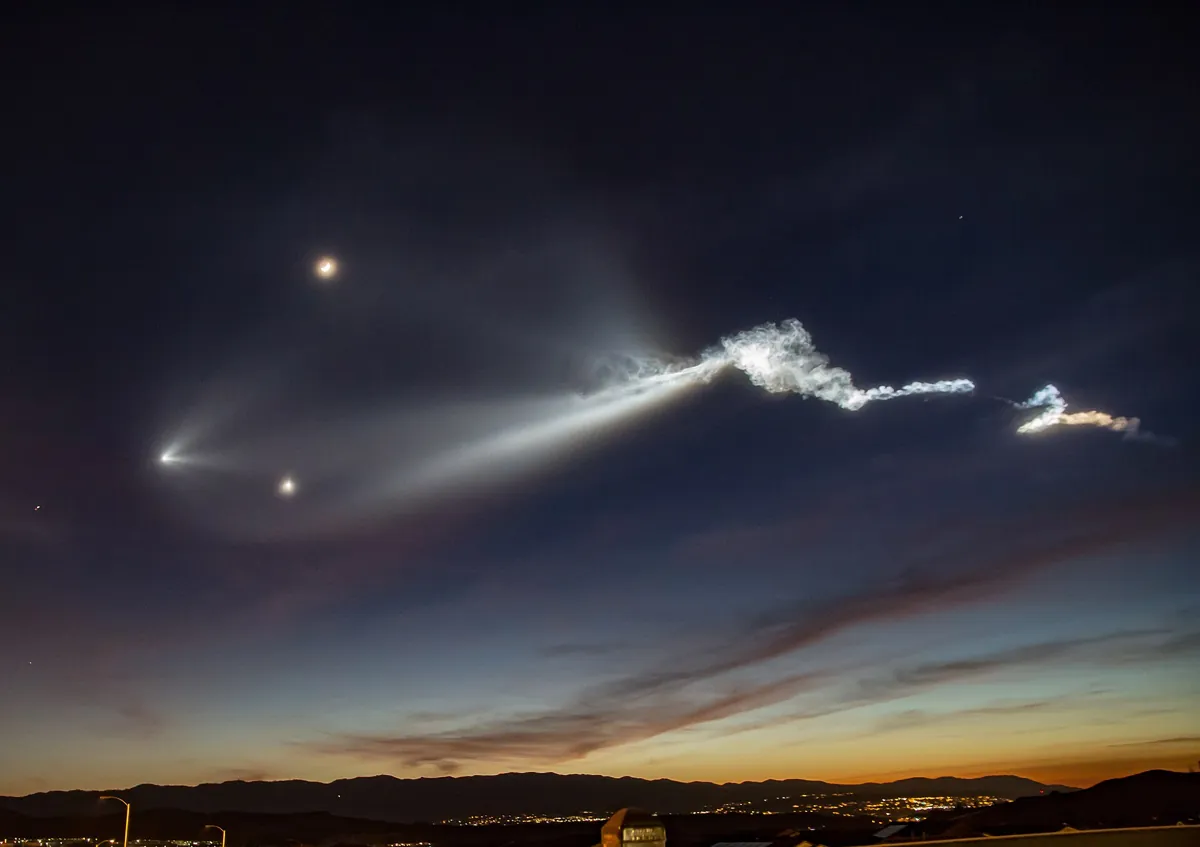
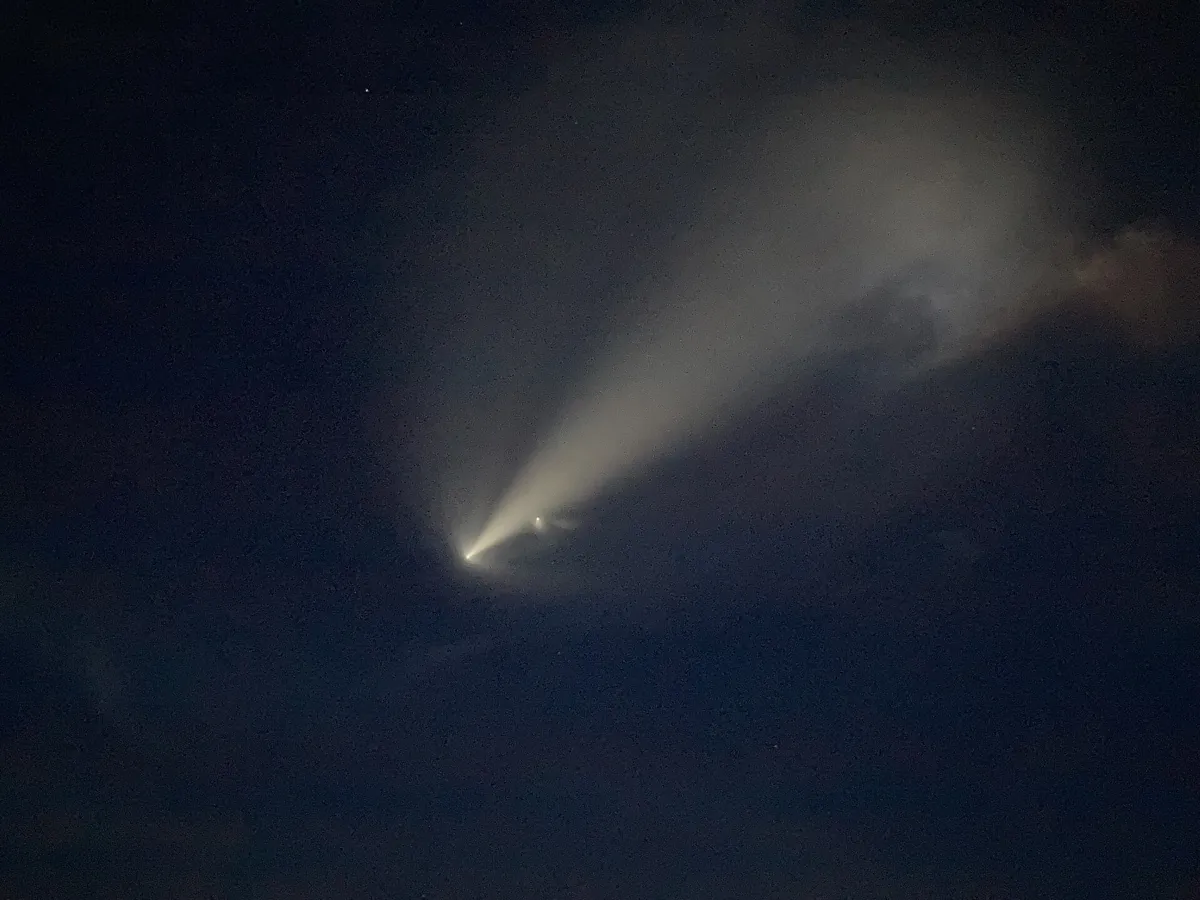

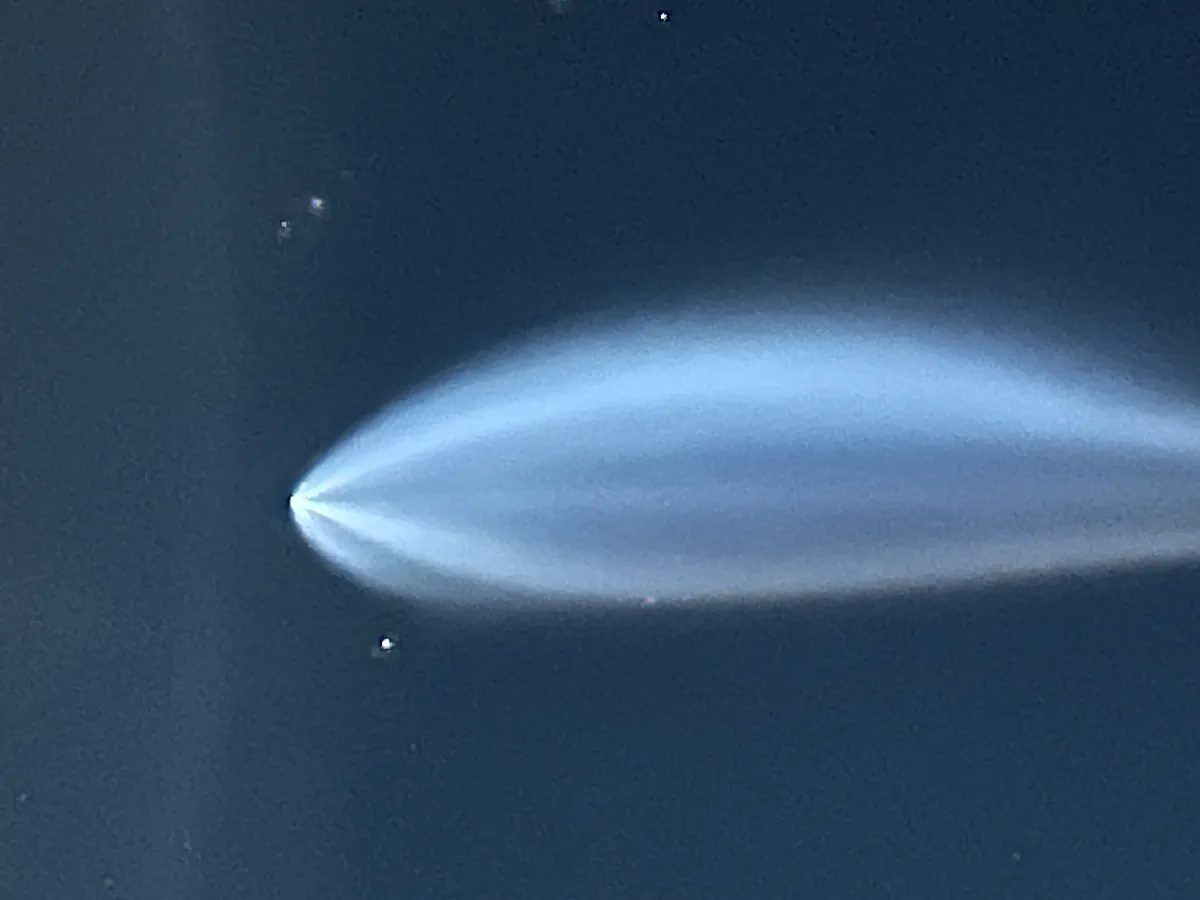



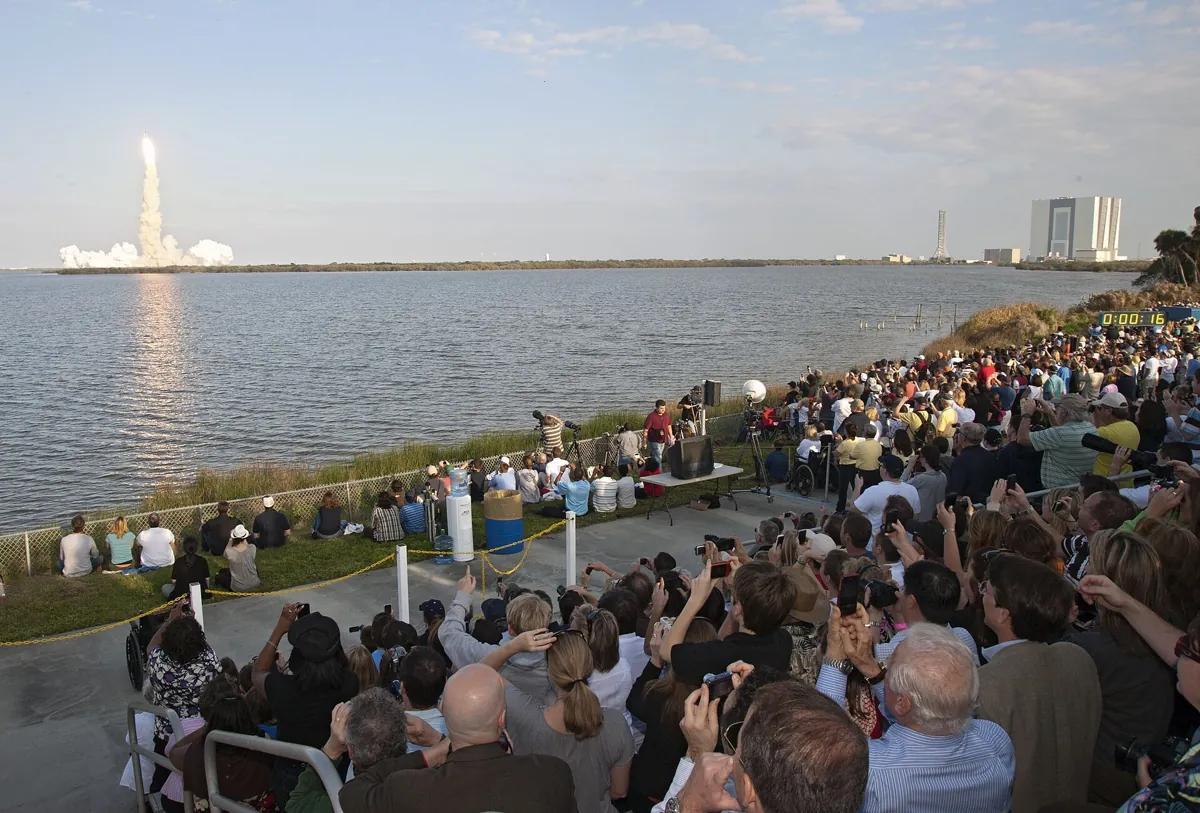
Watch it togetherA few minutes
A few minutes
you’ll all remember
- 01Head out 10 minutes early.
- 02Find a clear, low view in the arrow’s direction.
- 03Phones away. Let your eyes adjust.
- 04It glows for only a few minutes.
- 05Blanket. Cocoa. Look up.
- 06Snap one photo, then just watch.
Alerts
Subscribe once.
It updates itself.
A calendar feed of launches visible from your location, with a reminder 45 minutes before.
How it works
Sunlight, high up.
Darkness, down here.
Within minutes a rocket climbs above 100 km. Up there it can still be in sunlight while your sky is dark, which lights the exhaust into a glowing “jellyfish.”
Best odds: launches 30–120 minutes before your sunrise or after your sunset, within about 1,000–1,500 km of the pad.
Estimate only. We model a typical Falcon 9 ascent along a likely direction, then check what clears your horizon and what is in sunlight. Clouds, haze and delays matter.